


The racial and ethnic composition of the U.S. population has steadily become more diverse, but longitudinal studies of conditions such as diabetes have predominantly consisted of white adults, which can obscure biological drivers. Medical practice may also fail to take into consideration the roadblocks that keep resource-limited individuals from seeking care or following through with treatment, affecting health outcomes.

In the panel discussion, Mapping Diabetes: Epidemiology in a Changing U.S. Demographic Landscape, on Friday, June 5 from 3:45–5:15 p.m. in room R05 of the Ernest N. Morial Convention Center, a group of experts will examine how diabetes affects various racial and ethnic populations in the U.S. and how more expansive studies can improve care for these individuals, which in turn can improve care for all people living with diabetes. On-demand access to recorded presentations will be available to registered participants following the conclusion of the 2026 Scientific Sessions, from June 10–August 10.
The number of individuals of Asian descent in the U.S. has doubled over the last two decades, and Asian Americans experience a higher burden of diabetes at younger ages, relative to other racial groups, said Jithin Sam Varghese, PhD, MTech, Assistant Professor in the Hubert Department of Global Health and Emory Global Diabetes Research Center at Emory University, who will discuss findings of a study on trends in the prevalence of diabetes and prediabetes among Asian subgroups in the U.S. National studies may treat Asian Americans as a monolith, Dr. Varghese said, and doing so may mask differences between subgroups, which are not always clearly reflected in national survey data.
“The precision in estimates from nationally representative surveys for smaller subgroups is limited by design, and therefore does not permit inference of trends in disease burden,” he explained.
To see these trends more clearly, researchers turned to the Epic Cosmos research platform, an integrated electronic health records (EHR) database of over 300 million people representing each of the 50 states; Washington, DC; and multiple U.S. territories.
“We estimated the national and subnational trends in prevalence of diabetes and prediabetes across Asian subgroups from a nationwide sample of EHRs in the United States,” Dr. Varghese said. “We compared these findings with estimates from nationally representative surveys and published estimates from other subnational sources. Findings from this study provide preliminary estimates of diabetes and prediabetes burdens among Asian American communities across all states nationally.”
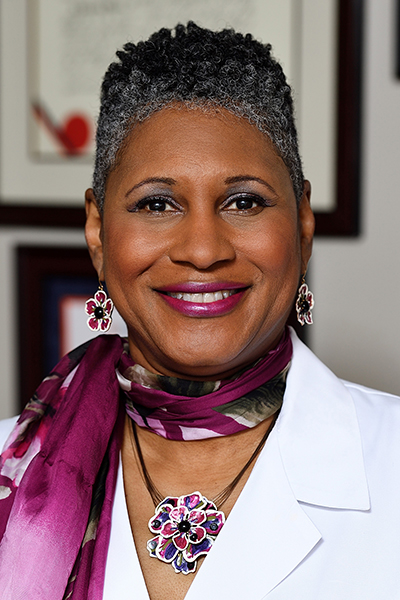
Sherita Hill Golden, MD, MHS, the Hugh P. McCormick Family Professor of Endocrinology and Metabolism at Johns Hopkins University School of Medicine, will discuss diabetes treatment and prevention in African American populations.
“I will present data that highlight effective interventions for improving diabetes outcomes that have been effective in African American populations, which include improving glucose control, blood pressure, and cholesterol, and reducing complications,” Dr. Golden said.
Ideally, she said, there needs to be a multi-level approach to improving diabetes care, which includes not just educating the people living with the disease or clinicians, but changing the ecosystem in which clinicians practice to support identification of the people they treat who are not meeting goals and who could benefit from targeted interventions. It’s important to probe for what individuals aren’t telling their health care teams—such as existing financial hardships—that make taking diabetes medications difficult to impossible.
Though Dr. Golden will specifically talk about what is needed to support African American populations, which tend to have a higher burden of diabetes, what improves outcomes for resource-limited populations improves outcomes for everyone.
“The things we’ve learned that work in African American populations can be adapted to work in Latino populations and rural populations,” Dr. Golden noted. “So, there’s something for everybody in this session who’s taking care of people who come from different backgrounds and have varied resources.”
Florence Hoffert-Dallo, PhD, MPH, Chairperson and Professor of Public Health at Oakland University, will present an overview of how Arab American communities are affected by diabetes.

Save the date
Make plans to join us June 18–21, 2027, for the 2027 Scientific Sessions at the Walter E. Washington Convention Center in Washington, DC. Registration will open in January.