
Over the past 40 years, there have been significant advances in the clinical management of diabetes. The development of insulin analogs has greatly improved outpatient care for type 1 diabetes, and technology—especially continuous glucose monitors (CGMs)—has been particularly transformative. Despite these advances, progress in inpatient diabetes management remains limited.

During the session The AIDING Trial: Automated Insulin Delivery in the Hospital—Results and Implications for Inpatient Diabetes Care, a panel of experts will discuss the rationale for and clinical trial results for automated insulin delivery (AID) in the inpatient setting. The session will be held on Sunday, June 7 from 8:00–9:30 a.m. in Great Hall A of the Ernest N. Morial Convention Center. On-demand access to recorded presentations will be available to registered participants following the conclusion of the 2026 Scientific Sessions, from June 10–August 10.
The AIDING trial is integrating currently available technologies by combining a sensor and a pump and using a rapid-acting insulin analog. This represents one of the first multicenter efforts to integrate these technologies within U.S. hospital workflows. The goal is to reach glycemic targets, prevent diabetic ketoacidosis (DKA), decrease hypoglycemia, and ultimately shorten hospital stays and reduce hospital-acquired infections.
Irl B. Hirsch, MD, MACP, Professor of Medicine at the University of Washington Medicine, who will chair the symposium, identified two key factors that hinder effective inpatient diabetes care: insufficient understanding of the various types of diabetes and their management and inefficient nursing and workflow integrations, which can delay insulin dosing.
“This has been an interest of mine since I was a research fellow in the late 1980s because I saw how poor inpatient insulin use was,” he said. “And what I can tell you is, depending on which hospital you are looking at, it hasn’t changed, it hasn’t gotten any better.”
This issue is especially concerning for people living with type 1 diabetes. Missing or delaying an insulin dose can cause blood glucose levels to spike, potentially resulting in DKA, a dangerous complication that may lead to longer hospital stays.
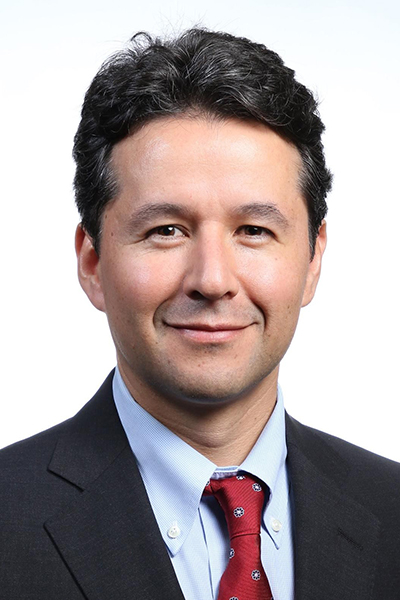
Francisco Pasquel, MD, MPH, Associate Professor at Emory University School of Medicine, will discuss the implications of the AIDING trial results for inpatient care.
This National Institute of Diabetes and Digestive and Kidney Diseases (NIDDK)-funded study was designed to address the management of non-intensive care unit patients with the most complex glycemic patterns. Most clinical trials have excluded individuals on steroids and those with type 1 diabetes or advanced kidney disease due to the lack of a successful management strategy.
Typically, individuals receive several daily insulin injections. Those with mild hyperglycemia can sometimes be treated with oral medications and long-acting insulin alone. However, for individuals with persistent or hard-to-manage hyperglycemia, maintaining them within the target range with multiple daily injections remains a major challenge.
AIDING, a randomized clinical trial, evaluated AID initiated in the hospital, compared with multiple daily injections in hospitalized individuals with type 1 or type 2 diabetes. Both groups used real-time CGM with remote monitoring to help reduce significant glucose excursions.
The primary endpoint was time spent in the target range, and investigators observed a substantial between-group difference, Dr. Pasquel said. Critically, these findings were consistent across pre-specified subgroups, including type 1 diabetes, steroid exposure, kidney disease severity, and baseline A1C.
“What’s particularly important is that this was implemented using a nurse-driven workflow, making it scalable and practical in real-world settings,” Dr. Pasquel said. “However, broader adoption will require integration into hospital workflows and staff training. The next step is to determine whether these improvements can be generalized across health systems and translate into better patient outcomes, including less clinical deterioration, fewer hospital-acquired complications, and faster recovery.”
Additional presenters include:
- Georgia Davis, MD, Associate Professor, Emory University School of Medicine, who will address diabetes technologies in the hospital and the rationale for AID
- Michael Hughes, MD, Assistant Professor, Emory University School of Medicine, who will discuss building nursing and workflow integrations
- Sue Brown, MD, Professor of Medicine, Endocrinology, and Metabolism, University of Virginia School of Medicine, who will review inpatient and AID efficacy and safety for AIDING

Save the date
Make plans to join us June 18–21, 2027, for the 2027 Scientific Sessions at the Walter E. Washington Convention Center in Washington, DC. Registration will open in January.