


In a series of phase 2b trials, berobenatide, an investigational injectable glucagon-like peptide-1 receptor agonist (GLP-1 RA), demonstrated robust weight loss, both in people with obesity or overweight, and in those with obesity or overweight and type 2 diabetes.

“Berobenatide could be the first monthly GLP-1 receptor agonist,” said Louis J. Aronne, MD, FACP, DABOM, the Sanford I. Weill Professor of Metabolic Research and Director of the Comprehensive Weight Control Center, Weill-Cornell Medical College. “It appears to be very potent, meaning that very low doses can be used, and this is scalable. It’s very long-acting, and we think that can improve the dosing and the high dropout rate we see with our patients. The fully biased access to the receptor means that dual agonist-like weight loss should be possible.”
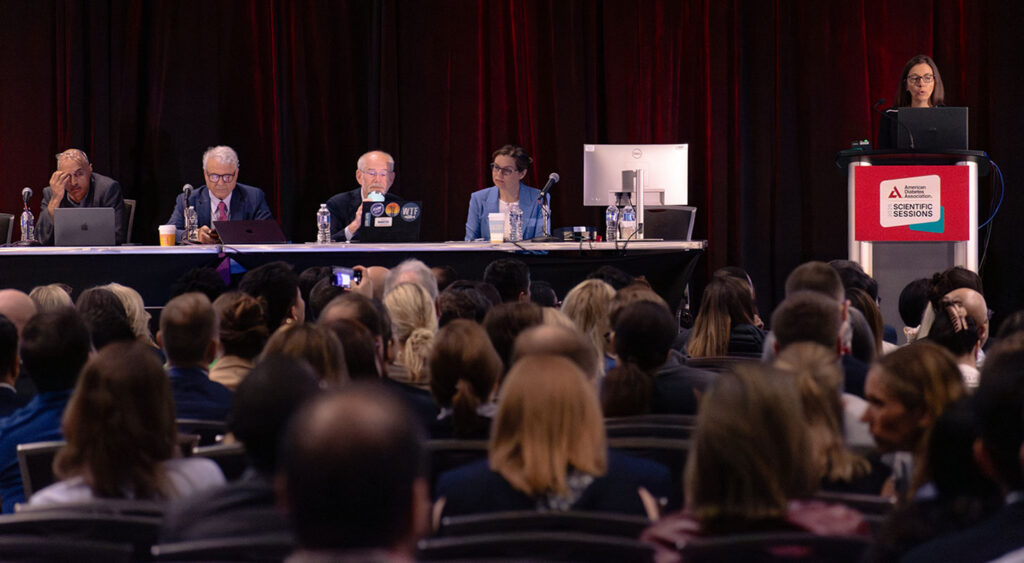
Trial results were shared on Saturday, June 6 during the symposium, The VESPER-1 OLE, -2 and -3 Trials of Berobenatide (MET-097, PF-08653944) an Ultra-Long-Acting GLP-1 Receptor Agonist for Weight Management. On-demand access to recorded presentations will be available to registered participants following the conclusion of the 2026 Scientific Sessions, from June 10–August 10.
Berobenatide is a fully biased GLP-1 RA, meaning that it activates cyclic adenosine monophosphate (cAMP) over beta arrestin. This bias inhibits receptor internalization, leading to prolonged efficacy and possibly improved tolerability. Further, berobenatide is terminally lipidated, meaning it can bind to the GLP-1 receptor with or without dissociation from albumin. This gives berobenatide an extended half-life, which enables potential for monthly dosing.
The drug is being investigated in the VESPER phase 2b clinical trial program, which includes 3 trials in individuals with and without type 2 diabetes.
VESPER-3
VESPER-3 was a 64-week placebo-controlled trial that assessed the efficacy and safety of monthly berobenatide in adults with obesity or overweight with hypertension and/or dyslipidemia. Patients were randomized to four treatment arms starting with weekly dosing and transitioning to monthly dosing after 12 weeks. The primary endpoint was the percent change in body weight at week 28.
After 28 weeks, berobenatide demonstrated placebo-adjusted weight loss of up to 12.3% with the 4.8 mg monthly dose. Notably, weight loss continued after the early transition from weekly to monthly dosing, with no evidence of a plateau at week 28. The trial is ongoing, and 64-week data will be available in the future.
The safety profile of berobenatide in VESPER-3 was consistent with the GLP-1 RA class, and no new safety signals were identified, supporting the switch from weekly to monthly dosing. Regarding gastrointestinal tolerability, 83% of treated participants reported no or only mild key gastrointestinal adverse events. Upon switching to monthly dosing, a mild, transient increase in nausea and/or vomiting was observed, but these symptoms improved rapidly with continued dosing. Dose escalation in the phase 3 trial is designed to reduce the incidence of gastrointestinal adverse events when switching to monthly dosing.

VESPER-2
VESPER-2 was a randomized, multicenter, double-blind, 28-week placebo-controlled trial that investigated the efficacy and safety of weekly berobenatide doses in adults with obesity or overweight and type 2 diabetes.
This trial included four active treatment arms: in two arms, the berobenatide doses were not escalated (0.4 mg and 0.6 mg), and in the other two arms, doses were escalated from 0.4 mg to 1.2 mg or 1.6 mg. The primary endpoint was the percent change in body weight.
“At 28 weeks, berobenatide demonstrated dose-dependent decreases in A1C up to 2.2% and in body weight of up to 10.2% with a slope that continued to decrease weekly,” said Ildiko Lingvay, MD, MPH, MSCS, Professor in the Department of Internal Medicine, University of Texas Southwestern Medical Center. “Berobenatide had a favorable risk-benefit profile with very few adverse events despite the fact that dose deescalation was not allowed in the study.”

The safety profile of berobenatide in VESPER-2 was consistent with the GLP-1 RA class, and no new safety signals were identified. Regarding gastrointestinal tolerability, 88% of treated participants reported no or only mild key gastrointestinal adverse events.
VESPER-1
VESPER-1 was a 28-week randomized, double-blind, placebo-controlled trial that assessed the efficacy and safety of once-weekly berobenatide across a range of dose levels (0.4 to 1.2 mg) in adults with obesity or overweight with hypertension and/or dyslipidemia. Participants who completed VESPER-1 were eligible to enroll in an exploratory open-label extension that evaluated higher weekly dosing (1.6 mg, 2.4 mg) and less frequent dosing (every other week and monthly).
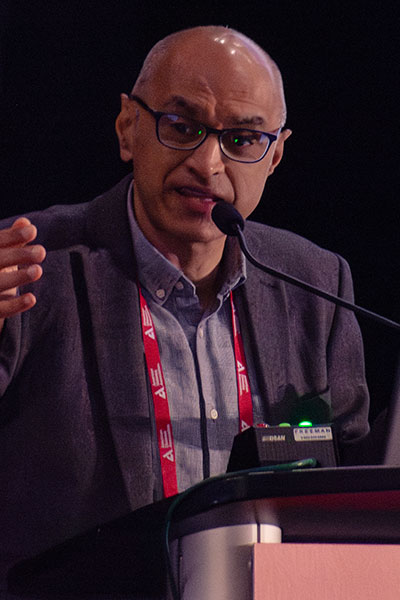
“To summarize the open-label extension of VESPER-1, berobenatide 2.4 mg weekly demonstrated 16% weight loss at 32 weeks, a favorable benefit-risk profile for monthly dosing, and safety and tolerability consistent with the class with no discontinuations related to gastrointestinal adverse events, and the gastrointestinal tolerability was excellent,” said John B. Buse, MD, PhD, the Verne S. Caviness Distinguished Professor of Medicine at the University of North Carolina School of Medicine at Chapel Hill.
The positive results from the VESPER phase 2b program are a welcome addition to a field that currently needs more weight loss options, panelists said.
“We need doses that match real-world needs, with a range of different doses,” said Naveed Sattar, MD, PhD, Professor of Cardiometabolic Medicine and Honorary Consultant in Cardiovascular and Metabolic Health, University of Glasgow, United Kingdom. “To me, the most important thing is that we need drugs that are scalable and accessible to the vast majority, not just within high-income countries, but the rest of the world, where obesity is rising again because of rapid changes in the environment. Some of you might say you don’t want these drugs, but the environment is not going to change back to the 1970s within the next week. It’s not going to change that quickly. It’s going to take three to four or five generations. So, we need solutions now for the many people living with obesity and the many developing obesity and chronic conditions.”

Save the date
Make plans to join us June 18–21, 2027, for the 2027 Scientific Sessions at the Walter E. Washington Convention Center in Washington, DC. Registration will open in January.