

Artificial intelligence (AI) is already impacting diabetes care, and researchers continue to explore additional applications of AI in the operation of closed-loop insulin monitoring and delivery systems, clinical decision-making, nutrition estimation, diabetes coaching, and more.
At the session, AI Integration into Diabetes Technology, a panel of experts will discuss current AI use in the care of people living with diabetes and how they predict it will shape future care. The symposium will take place on Saturday, June 6 from 8:00–9:30 a.m. in La Nouvelle Orleans C at the Ernest N. Morial Convention Center. On-demand access to recorded presentations will be available to registered participants following the conclusion of the 2026 Scientific Sessions, from June 10–August 10.

Boris Kovatchev, PhD, Professor and Founding Director of the Center for Diabetes Technology at the University of Virginia, will discuss how AI is driving the latest developments in fully closed-loop systems. For decades, Dr. Kovatchev has been a leading researcher and innovator in the algorithmic modeling driving the development of closed-loop control and decision-support systems for diabetes therapy.
Much of Dr. Kovatchev’s more recent work has focused on moving from hybrid artificial insulin delivery—where the individual using a device receives automatic basal insulin adjustments, but must determine or accept program recommendations and manually enter bolus insulin dosage amounts—to fully closed-loop systems that automatically calculate dosage and deliver all insulin. This includes reshaping the algorithms behind artificial insulin delivery systems by leveraging neural network capabilities, large datasets, machine learning, and AI.
“Achieving the transformation from existing hybrid closed-loop systems to fully automated closed-loop systems requires an adjustment in designing the closed-loop control algorithms,” Dr. Kovatchev explained. “It almost requires having AI models embedded behind the algorithms. This is essentially a fundamental transition of the base of the system from being models of the human metabolic system to being data-driven approaches based on neural networks or machine learning.”
Dr. Kovatchev noted that the use of AI in reshaping algorithms for automatic insulin calculation is reflective of similar AI developments across other industries and areas of healthcare, but has the advantage of being able to tap an enormous amount of data from insulin delivery devices currently worn by more than a million people with diabetes.
The pairing of AI algorithms with the growing databases of information and the development of virtual, individual metabolic profiles, or “digital twins,” can allow the algorithms to further personalize insulin delivery through continual scenario testing of external perturbances and responses on the digital twin model.
“There is a vast amount of data out there that enables this transformation from the old models that we started with more than 20 years ago to data-driven models that will enable fully automated control, anticipation of meals, recognition of patterns of exercise, and other aspects of daily life for a person living with diabetes,” Dr. Kovatchev said.
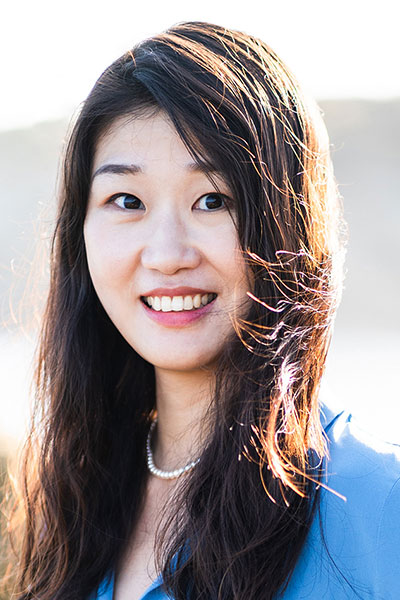
Yao Qin, PhD, Assistant Professor in the Department of Electrical and Computer Engineering and Co-Leader of the REAL AI Initiative at the University of California, Santa Barbara, will present an AI-powered app designed to provide automated macronutrient and carbohydrate estimation for integration with existing hybrid closed-loop insulin delivery systems.
Studies have shown that nutrition estimation from self-reported dietary intake has limited accuracy and high user burden. The publicly available NutriBench app allows users to enter meal information in natural language descriptions to receive detailed macronutrient and carbohydrate estimates.
Other, existing large language AI models are also capable of making text-prompted estimates, but the NutriBench algorithm has focused on pairing five-second response time with accuracy.
“We conducted studies comparing the AI results with the results of human dietitians and found that the AI model achieved comparable performance to the human dieticians,” Dr. Qin explained.
Dr. Qin and her team are working to include individualized estimates of postprandial glucose levels, insulin dose suggestions, estimations on the effect of planned exercise, and other factors that would simulate a user’s metabolism.
“Our main goal is to develop an AI-powered personal coach that delivers proactive intervention right before a hypoglycemic or hyperglycemic event might occur,” Dr. Qin said. “For someone living with diabetes, it would personalize the culture of diabetes care, allowing them to better take care of their nutrition, exercise, and mental health.”
Revital Nimri, MD, Director of the Scientific and Technology Diabetes Service at Schneider Children’s Medical Center of Israel, Petah Tikva, Israel, has focused years of research on innovative technologies for the treatment of type 1 diabetes. She will present an overview of the latest and emerging AI decision-support tools in diabetes care and evaluate where clinician judgment remains essential, and which aspects of clinical work and daily care these technologies may augment, automate, or potentially replace.
Mohammed Abusamaan, MD, MPH, Instructor of Medicine at Johns Hopkins Medicine, will round out the presentations with information about AI integration into diabetes coaching.
Save the date
Make plans to join us June 18–21, 2027, for the 2027 Scientific Sessions at the Walter E. Washington Convention Center in Washington, DC. Registration will open in January.