


An international panel at the 2026 Scientific Sessions of the American Diabetes Association® (ADA) seeks to raise awareness of a new proposed type of diabetes, also referred to as malnutrition-related diabetes, to further research aimed at better identifying and treating the tens of millions of people living with the disease worldwide.
The Joint ADA/International Diabetes Federation (IDF) Symposium: What Is Malnutrition-Related Diabetes? will be presented on Monday, June 8 from 1:30-3:00 p.m. in La Nouvelle Orleans B of the Ernest N. Morial Convention Center. On-demand access to recorded presentations will be available to registered participants following the conclusion of the 2026 Scientific Sessions, from June 10-August 10.
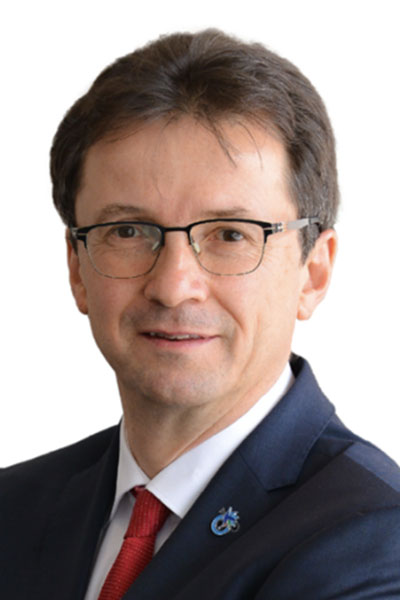
Peter E. H. Schwarz, MD, PhD, MBA, Professor of Medicine at the University of Dresden, Germany, and President of the International Diabetes Federation (IDF), will discuss an international working group, established during a consensus meeting of nearly 50 global experts in January 2025, in Vellore, India, which focused on the aforementioned subset of diabetes with the proposed designation “type 5 diabetes.”
“We’ll discuss the global perspective and global research strategy to elucidate the essence of type 5 diabetes,” Dr. Schwarz said.
Until April 2027, the IDF will serve as the umbrella organization under which the need to develop guidelines and treatment regimens for people living with the disease will be addressed, along with unmet needs and unmet research questions.
“We’re using this opportunity as a call to action for colleagues to bring in data and start gathering global research,” said Dr. Schwarz. “We’re encouraging people around the world—mainly Africa and Southeast Asia—to bring in data and information as partners in the discussion.”

Nihal Thomas, MD, PhD, Senior Professor in Endocrinology at Christian Medical College, Vellore, India, will offer insights on the differential diagnosis of type 5 diabetes. He will focus on the often subtle presentations of the disease, such as a body mass index (BMI) less than 19, and the need for choosing the best diagnostic algorithm, including abdominal imaging, to rule out pancreatic diabetes.
“Making a proper diagnosis is important,” said Dr. Thomas. “It’s all about awareness, as biases exist. We want to be more conscientious about the diagnostic algorithm with each individual. Finding cost-effective algorithms on a long-term basis is vital, as is finding ways to make tests affordable across the globe.”

Meredith Hawkins, MD, Professor of Medicine and Director of the Global Diabetes Institute at Albert Einstein College of Medicine, New York, and Chair of the IDF’s Type 5 Diabetes Working Group, will provide an overview of rigorous, comprehensive phenotyping studies.
Dr. Hawkins will highlight research she and her team conducted that garnered worldwide attention, leading to the consensus meeting and determination that malnutrition-related diabetes was an entity deserving its own unique classification.
Researchers performed stepped insulin clamp studies to track insulin action in the liver, muscle, and other tissue, and also examined stimulated insulin secretion curves, using C-peptide deconvolution studies.
“We felt it our mandate to deliver studies that would be completely convincing in terms of the methodology, precision, troubleshooting, data analysis—all to show this was clearly distinct from other forms of diabetes,” Dr. Hawkins said.

Michael Boyne, MD, Professor at the University of the West Indies, will focus on the prevention of and the need for data on treatment of diabetes related to malnutrition.
“This is a case where proper nutrition in early life can prevent type 5 diabetes,” said Dr. Boyne. “Here we have a unique form of diabetes, preventable by food, as these are undernourished people.”
He adds that while early treatments with oral agents and insulin are available, more data is needed.
Dr. Boyne also will review recent work uncovering the best approaches for nutritional rehabilitation, noting that dietary advice varies depending on a patient’s nutritional status, and address deficits that exist in the ways to manage the condition.
“We are highlighting a clarion call for research so we have better ways to treat individuals with malnutrition-related diabetes,” Dr. Boyne said.

Save the date
Make plans to join us June 18–21, 2027, for the 2027 Scientific Sessions at the Walter E. Washington Convention Center in Washington, DC. Registration will open in January.