

On the final day of the 2026 Scientific Sessions, a pair of experts will debate the merits of incorporating artificial intelligence (AI) into healthcare delivery now versus taking a wait-and-see approach. Nestoras Mathioudakis, MD, MHS, Associate Professor of Medicine at the Johns Hopkins School of Medicine, will make the case for taking action now. Neda Laiteerapong, MD, Professor of Medicine at the University of Chicago, will present evidence that caution is needed before extensive AI adoption in medicine.
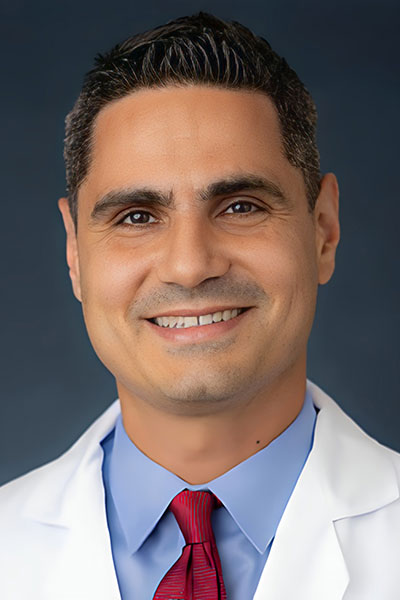
Immediate AI Integration into Health Care Delivery: Considering Costs, Quality, and Clinician Burnout will take place on Monday, June 8 from 3:15–4:15 p.m. in La Nouvelle Orleans C of the Ernest N. Morial Convention Center. On-demand access to recorded presentations will be available to registered participants following the conclusion of the Scientific Sessions, from June 10–August 10.
“AI has been a super hot topic in the last few years with large language models, and I think diabetes is a perfect use case for AI,” Dr. Mathioudakis said. He pointed to three themes to support his position: access to care due to workforce shortages, the data-driven nature of the field, and the quest for improved outcomes for people living with diabetes.
“There is a shortage of endocrinologists, which puts a burden on patients and providers,” he said, explaining that AI could help alleviate certain components of the workload of these clinicians. “We also have a lot of information to process, which can be difficult to do with the current care model. And we need to improve outcomes. The non-AI approach we’ve been using for decades hasn’t really been working well. We haven’t made much headway in terms of glycemic control.”
As a practicing clinician, Dr. Mathioudakis has seen firsthand how AI can help reduce burden on healthcare professionals and improve outcomes.
“AI tools around clinical documentation and prior authorization could offload the clinician of their cognitive work,” he said. “We get joy in thinking through a diagnosis and coming up with a treatment plan and counseling patients. But often our time is consumed with documenting what we’ve discussed with the patient and writing letters to insurance companies.”
An AI scribe has allowed Dr. Mathioudakis to rebalance the time he devotes to tasks, enabling him to spend more time with the people in his care, capture more details from each encounter, and feel less of a sense of burnout.

AI is also making its way into the electronic medical record through chart summarization tools.
“If you have a patient who has decades of encounters and diabetes, and you need to figure out where they stand currently and what they’ve tried. There is an amazing tool to condense hundreds of records and to surface what is relevant to the individual in front of you at that moment,” Dr. Mathioudakis explained, adding that the predictive analysis and risk scoring that AI facilitates is a boost to clinical decision-making, not a replacement.
“It’s still in the hands of the physician to make the decision, but the AI is pulling together the information that’s relevant to make the decision,” he said.
Pushback to using AI in healthcare delivery exists at all levels, from medical students to experienced physicians, Dr. Mathioudakis said. Concerns about “never skilling” and about accuracy are the two primary drivers of this hesitancy.
“There is this notion that if the AI is gathering the data, interpreting the data, and making decisions about diagnosis and treatment completely independent of you, what is your role as a physician moving forward? How will you ever learn if you don’t have to do that hard work?” he said.
Dr. Mathioudakis said this challenge can be overcome by rethinking how medical students are taught to obtain information and use AI tools in their decision-making. One solution, practiced at some institutions, is restricting access to certain AI tools to specific levels of training so that trainees gain experience with tasks such as taking personal health histories of the people they treat.

Save the date
Make plans to join us June 18–21, 2027, for the 2027 Scientific Sessions at the Walter E. Washington Convention Center in Washington, DC. Registration will open in January.