

In a special address on Saturday, June 6, American Diabetes Association® (ADA) President, Healthcare & Education Amy Hess-Fischl, MS, RD, LDN, BC-ADM, CDCES, challenged the diabetes health community to transform diabetes care by leveraging existing diabetes self-management education and support (DSMES) resources and seeking out new partnerships.
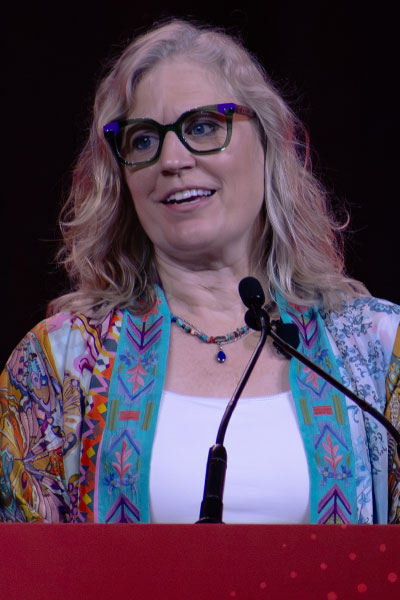
“People with diabetes and obesity need and want the kind of individualized education that DSMES exists to deliver,” Ms. Hess-Fischl said during From Patients to Partners: Elevating Voices in Diabetes and Obesity Care; President, Health Care & Education Address; and Distinguished International Service in the Cause of Diabetes Award Lecture. On-demand access to recorded presentations from this and other sessions will be available to registered participants following the conclusion of the 2026 Scientific Sessions, from June 10–August 10.
Ms. Hess-Fischl, who leads the Kovler Diabetes Center Certified Education Team at the University of Chicago, noted that as attendees gathered for the 2026 Scientific Sessions, they were also marking the 40-year anniversary of the ADA becoming a national accrediting organization for DSMES programs through the Centers of Medicare & Medicaid Services.
These programs represent a range of evidence-based, patient-focused educational initiatives and programs designed to empower individuals to maintain and improve their own health and have become core to the mission of the ADA. In the past four decades, the ADA has become the largest accrediting organization, recognizing 7,000 programs with gold-standard designation, serving more than 10 million people with diabetes in DSMES programs since 2012 alone, and seeing some 800,000 annually.
“DSMES is meant to be the foundation of diabetes care for all people with diabetes—whether it is type 1, type 2, during pregnancy—all ages,” Ms. Hess-Fischl said.
One of the reasons DSMES occupies such a prominent role is that it has repeatedly proven effective in transforming diabetes treatment, she explained, pointing to a series of studies showing DSMES leading to decreases in A1C levels, reductions in emergency visits, and a decrease in weight for people living with diabetes.
Unfortunately, the effectiveness of DSMES programs is not always translated into participant registration—with one Centers for Disease Control and Prevention study showing that only 6.8% of privately insured individuals with type 2 diabetes participated in a DSMES program within the first 12 months of their diagnosis.
“These numbers highlight the fact that benefits of DSMES may not be as obvious to people with diabetes as they are to us—or they may not know it is an option at all, and we need to change that,” Ms. Hess-Fischl said.
Looking at possible solutions, Ms. Hess-Fischl outlined the potential for growing partnerships with community health workers and diabetes prevention program centers, as well as expanding outreach to people living with diabetes through telehealth appointments and institutionalized referral services.
“It is still a reality to improve upon how DSMES is delivered and help it to evolve to fit the human needs of people with diabetes—to meet them where they are, literally and figuratively,” Ms. Hess-Fischl said.
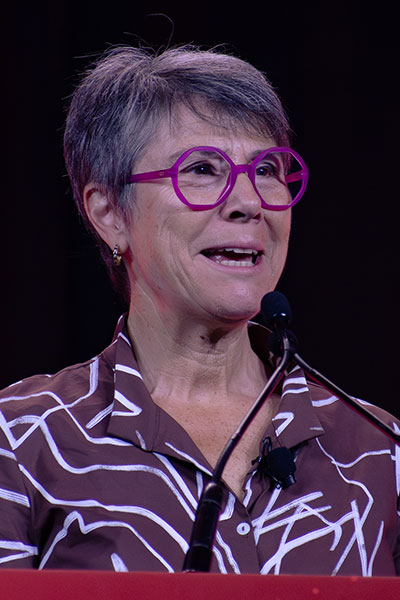
Distinguished International Service in the Cause of Diabetes Award Lecture
Coordinating research activities and integrating the experience of those living with diabetes was also a core theme in the Distinguished International Service in the Cause of Diabetes Award Lecture by Chantal Mathieu, MD, PhD, Professor of Medicine and Head of the Division of Clinical Endocrinology at KU Leuven, Belgium.
She outlined how patient care in her country has been transformed since the late 1990s by integrated care outcomes—with diagnosed patients receiving substantial educational and technological support, including free technical supplies, as long as they adhere to specialist care service.
“This integrated approach is crucial,” Dr. Mathieu said, adding that studies examining the effects of general population health since the introduction of the integrated care system have shown improvements in A1C scores and lower prevalence of diabetes-related retinopathy.
Integrative and collaborative approaches have also transformed research, Dr. Mathieu said, pointing to European-wide initiatives working toward a cure and prevention of type 1 diabetes, such as the INNODIA. Since 2016, this project has introduced pooled-data studies examining whether gene expression signatures, proteome signatures, or microRNA (miRNA) signatures can predict the speed of progression of C-peptide loss. The program also initiated novel private-public partnerships and patient advisory councils (PACs), whose input shaped the procedures and character of the research.
“We asked a lot of the PACs,” Dr. Mathieu explained. “They helped us in designing the trials, they worked with recruitment centers and retention of people, and they helped researchers understand why what they did was crucial—this part was amazing.”

Elevating Voices in Diabetes and Obesity Care
Dr. Mathieu and Ms. Hess-Fischl shared the session with three people living with diabetes: Kyle Banks, of the Kyler Cares Foundation; Luis Chastain, at Tidelands Health; and Betsy Rodríguez. The three speakers celebrated personal achievements and advancements in diabetes and obesity care—from innovative programs working with underprivileged youth to patient-focused educational toolkits.
The panelists also stressed the importance of never dismissing the upheaval that diabetes or obesity can impose on daily life.
“The initial diagnosis, even as a medical provider, was devastating,” said Mr. Chastain, who was diagnosed with type 2 diabetes eight years ago. “There have been some tremendous physical challenges, but also a mental and emotional toll. You are navigating different treatments, you are navigating the healthcare system and multiple specialists, and of course the requisite insurance issues that can be so frustrating for folks.”

Save the date
Make plans to join us June 18–21, 2027, for the 2027 Scientific Sessions at the Walter E. Washington Convention Center in Washington, DC. Registration will open in January.