
A new small-molecule, non-peptide glucagon-like peptide-1 receptor agonist (GLP-1 RA), under investigation in the ACHIEVE-2, ACHIEVE-3, and ACHIEVE-5 clinical trials, has ushered in new hope for healthcare professionals seeking to help individuals with diabetes improve glucose management and achieve weight loss. The oral treatment option, orforglipron, is an investigational once-daily pill that has demonstrated positive efficacy and safety outcomes.
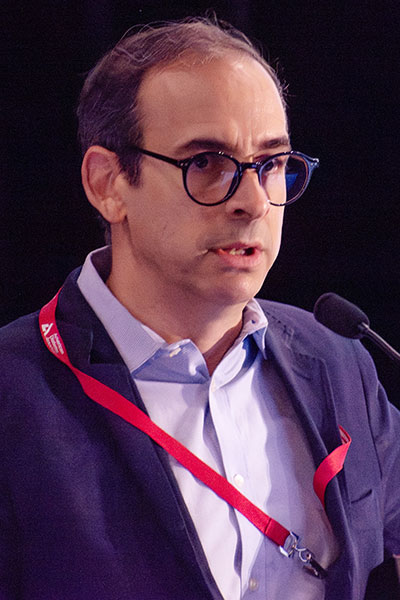
“The primary goal is to provide patients with an alternative that meets their health needs without the logistical challenges of current treatments,” said Rodolfo J. Galindo, MD, University of Miami. Investigators aim to use orforglipron to address the limitations of current GLP-1 RAs, which are peptide-based and require injection.
Dr. Galindo moderated the symposium, From Pen to Pill: Achieving a Paradigm Shift in Type 2 Diabetes—The Orforglipron ‘ACHIEVE’ Clinical Trial Program, on Monday, June 8. On-demand access to recorded presentations will be available to registered participants of the 2026 Scientific Sessions through August 10.
ACHIEVE-2
Michelle D. Welch, MD, Founder of Diabetes and Metabolism Specialists, San Antonio, shared ACHIEVE-2 outcomes comparing orforglipron with dapagliflozin in adults with type 2 diabetes. At week 40, ACHIEVE-2 demonstrated superiority of orforglipron versus dapagliflozin for the primary endpoint of change in A1C compared to baseline as well as key secondary endpoints.
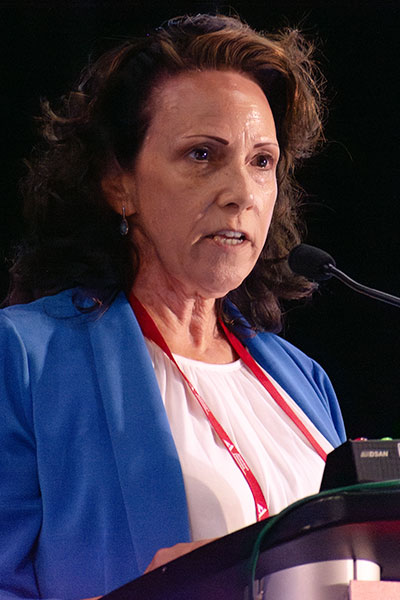
The phase 3, randomized study was conducted at 73 sites across the United States, China, Mexico, Germany, Poland, and Taiwan. It compared the efficacy and safety of orforglipron at 3 mg, 12 mg, and 36 mg doses to a 10 mg dose of dapagliflozin among 962 patients.
Trial participants in the orforglipron arms experienced reductions in A1C of 1.3%–1.7%, compared with an 0.8% reduction in the dapagliflozin arm. Orforglipron resulted in an A1C of less than 7% in up to 80% of participants and an A1C of 6.5% or lower in up to 69% of participants. Orforglipron also produced a greater reduction in body weight, ranging from 6.3%–7.3%, compared with 3% for dapagliflozin.
“We also showed improvement in cardiometabolic factors, triglycerides, non-HDL, and systolic blood pressure at our highest dose, 17.2 mg,” Dr. Welch reported.
ACHIEVE-3
The phase 3 ACHIEVE-3 trial also met its primary endpoint, demonstrating superiority of orforglipron compared to oral semaglutide in lowering A1C.

“The findings support orforglipron as a potential new oral GLP-1 RA effective option, when approved, for people living with type 2 diabetes to address key known barriers associated with current injection therapy or administration recommendations,” said Julio Rosenstock, MD, Clinical Professor of Medicine at the University of Texas Southwestern Medical Center.
The randomized, open-label trial evaluated the efficacy and safety of orforglipron compared with oral semaglutide in adults with type 2 diabetes inadequately controlled with oral semaglutide. Both agents target the GLP-1 pathway to help lower blood glucose levels and support weight loss in adults with type 2 diabetes.
After a year of treatment, daily orforglipron provided greater improvements in glycemic management and weight loss than oral semaglutide at doses approved for type 2 diabetes, but orforglipron was associated with a higher occurrence of gastrointestinal symptoms and a slightly greater increase in heart rate.
In the orforglipron arm, A1C was reduced by 1.9–2.2%, depending on dose (12 mg and 36 mg), compared to 1.1%–1.4% in the oral semaglutide arm (7 mg and 14 mg). Body weight was reduced by 8.2% with orforglipron 36 mg versus 5.3% with oral semaglutide 14mg.
The study, conducted in the U.S., Mexico, Argentina, China, and Japan, included 1,698 participants.
ACHIEVE-5

ACHIEVE-5 showed robust and clinically meaningful improvements in glycemic management, with A1C reduction up to 2.1%. Up to 81% of participants treated with orforglipron achieved the A1C target <7%. Up to one in five participants achieved near-normoglycemia with the highest dose of orforglipron. Further, the trial achieved significant reductions in body weight, up to 6.1%.
Francesco Giorgino, MD, PhD, Professor of Endocrinology at the University of Bari Aldo Moro, Italy, presented these results from ACHIEVE-5, a 40-week phase 3 global study evaluating the safety and efficacy of orforglipron (3 mg, 12 mg, and 36 mg) in adults with type 2 diabetes taking insulin glargine, with or without other diabetes medications, such as metformin and/or sodium-glucose cotransporter-2 inhibitors.
“For many patients, basal insulin alone is not enough to maintain glycemic control, and an oral GLP-1 therapy could offer a simpler alternative to intensifying insulin treatment while giving healthcare professionals greater flexibility in managing care,” said Dr. Giorgino.
Up to 61% of participants assigned to orforglipron versus 43% assigned to placebo achieved the treat-to-target goal of fasting serum glucose <100 mg/dL. Orforglipron added to insulin glargine, which is typically associated with weight gain, demonstrated body weight reductions up to 6.1%.

Balancing Efficacy and Burden: A Panelist’s Perspective
Alice Yuk Yan Cheng, MD, FRCPC, Associate Professor of Medicine, University of Toronto, Canada, presented an analysis of orforglipron after reviewing the ACHIEVE outcomes, with a focus on balancing efficacy and burden.
She analyzed oral small-molecule non-peptide GLP-1 RAs with a checklist of factors—including the effects on blood glucose levels, body weight, and cardiovascular risk factors, ease of administration, tolerability, cost, and access.
She described orforglipron as the “most efficacious oral antihyperglycemic therapy for glucose and weight reduction with comparable safety and similar/worse tolerability with other GLP-1-based therapies and no food or water restrictions.”
In offering where this option fits into the treatment algorithm, she said, “They fit pretty much where we would use a GLP-1, and I’m hoping we will all use GLP-1s earlier in the course of treating diabetes, so this certainly brings value to that proposition.”

Save the date
Make plans to join us June 18–21, 2027, for the 2027 Scientific Sessions at the Walter E. Washington Convention Center in Washington, DC. Registration will open in January.