

The importance of unifying biomedical science and social determinants of care was the core message from American Diabetes Association® (ADA) President, Medicine & Science A. Enrique Caballero, MD, during the Sunday, June 7, special session, President, Medicine & Science Address and Banting Medal for Scientific Achievement Award Lecture.
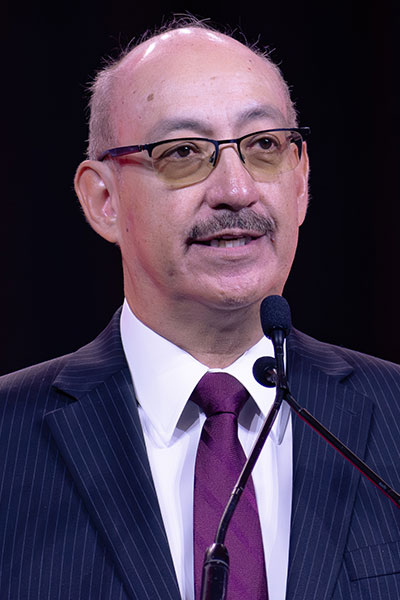
“At the heart of this address is a call to action, a call to embrace a more integrated vision of research and care, one that unites the rigor of biomedical science with the realities of social and cultural determinants of health,” Dr. Caballero said. “Only through this integration can we truly advance our mission to improve the lives of all individuals with diabetes, obesity, and related disorders.”
On-demand access to this and other recorded presentations will be available to registered participants following the conclusion of the 2026 Scientific Sessions, from June 10–August 10.
Accomplishments & Gaps
While summarizing the progress advancing diabetes treatment and management—pharmacological therapy, technology and precision medicine, among others—Dr. Caballero shed light on existing gaps in care.
“These achievements are nothing short of extraordinary, yet, despite this remarkable progress, a sobering reality remains,” he said, adding that trends in risk factor control reported in the National Health and Nutrition Examination Surveys (NHANES), particularly among those between 20 and 44 years of age, are especially profound.
“These findings likely reflect a convergence of challenges, competing work and life demands, financial pressures, and heightened psychosocial stress,” Dr. Caballero said. “How can we meaningfully connect biological mechanisms to the environment in which people live, their realities, their daily context—what we call their milieu?”
Early in his career, he saw that patients were not failing to achieve their health goals due to a lack of motivation, but because they were constrained by forces beyond their control, including the economic, structural, and social realities of their environment.
“I became and remain a student in this field, continually learning from those who have dedicated their careers to understanding these forces, but the data are unequivocal,” Dr. Caballero said, citing multiple studies that he said illustrate how life experiences become biologically embedded in the individual. “Understanding how social determinants of health influence outcomes is crucial, but complex.”
Research Crafted with Community Care
Dr. Caballero identified ways to move forward with research that not only address but involve the people living with diseases like diabetes.
“We must rethink biomedical research by integrating social and cultural determinants of health from the very beginning, not as an afterthought. Patients need to be at the table from the start, helping shape the questions we ask and the solutions we develop,” Dr. Caballero said, adding that excluding these populations limits both equity and real-world impact. “Patients should not simply participate in research; they should help design it.”
He presented specific action items to integrate biomedical science and social determinants of care into both clinical research and patient care.
“It’s not whether we should do better in our clinical encounters, but how?” Dr. Caballero said. “I think we can start by embedding the assessment of social determinants of health directly into our electronic medical record systems.”
He said building teams that address both the biomedical and social aspects of diabetes will be critical, as will demonstrating that these teams improve patient outcomes and, ideally, reduce costs.
“A functional team matters. We can make it happen,” he added. “Outstanding research, much of it supported by the ADA, and led by many people here, has shown that partnering with patients and families is essential to improving outcomes.”
To make this point, he highlighted examples of innovative approaches, such as connecting with the community through salsa dancing and text messaging, that he and his colleagues have undertaken at Harvard Medical School, where he is director of international innovation.
“We must continue to engage and teach healthcare professionals, organizational leaders, policymakers, and governments, so that remarkable advances in science technology are not applied in isolation, but are thoughtfully integrated from the outside into the real-world context in which people live.”
In his closing, Dr. Caballero rallied the audience to embrace the opportunities and challenges ahead.
“We should celebrate how far we’ve come, but also recognize how much further we can work. Achieving optimal care for communities with diabetes, obesity, and chronic conditions requires that every stakeholder play an equal role,” Dr. Caballero said. “No barrier—race, ethnicity, socioeconomic status, education, or belief—should stand between individuals and the benefits of scientific and technological progress. Understanding and meeting the needs of all people is what defines us not only as better health professionals but as better human beings.”
Save the date
Make plans to join us June 18–21, 2027, for the 2027 Scientific Sessions at the Walter E. Washington Convention Center in Washington, DC. Registration will open in January.