

Drawing on decades of groundbreaking research, Takashi Kadowaki, MD, PhD, urged colleagues to embrace unexpected results and fully commit to seeking out elusive truths through sustained scientific work that embodies rigor, courage, passion, and creativity.
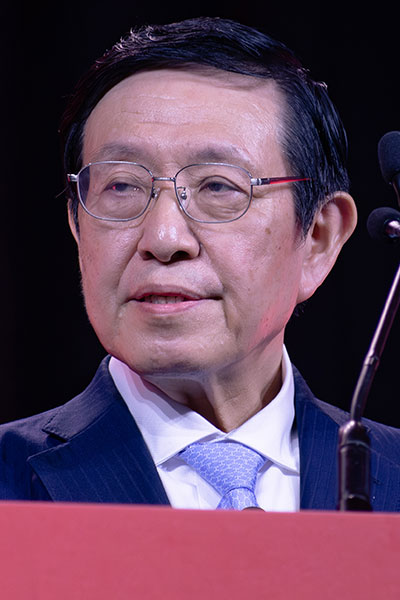
“Science is a lifelong journey that engages our entire being,” said Dr. Kadowaki, President of Toranomon Hospital and Professor Emeritus at Tokyo University, Japan, after receiving the Banting Medal for Scientific Achievement, the highest scientific award from the American Diabetes Association® (ADA), on Sunday, June 7 at the 2026 Scientific Sessions.
His remarks were part of the session, President, Medicine & Science Address and Banting Medal for Scientific Achievement Award Lecture. On-demand access to recorded presentations will be available to registered participants following the conclusion of the 2026 Scientific Sessions, from June 10–August 10.
Dr. Kadowaki’s contributions to the biology and genetics of insulin action, insulin resistance, and type 2 diabetes have helped redefine the field of diabetes health. Notably, his discovery of adiponectin receptors (AdipoR1/R2) and the elucidation of their structure and function represented a breakthrough.
Dr. Kadowaki drew on this discovery, as well as on other key achievements in his career, to illustrate his belief that “breakthroughs in science often arise when results contradict expectations.”
For example, he noted that his innovative work with insulin receptor substrate 1 (IRS-1) knockout mice in the mid-1990s and his unexpected finding that they failed to develop diabetes led to the discovery of IRS-2 and the central role of beta cells in the development of type 2 diabetes. Dr. Kadowaki’s study of peroxisome proliferator-activated receptor gamma (PPAR gamma) knockout mice in the late 1990s unexpectedly showed they had improved insulin sensitivity, which led to the discovery of the insulin-sensitizing effect of insulin. And his examination of adiponectin receptors in the early 2000s revealed an unexpected and unique topology, which facilitated the identification of an entirely new receptor family and signaling pathways.
Dr. Kadowaki called these indirect routes of discovery “a spiral approach to the truth.” He explained that if a study confirms a hypothesis, then it brings the scientific community one step closer to the truth, but if a study brings unexpected results and contradictions, then it might lead to great leaps forward.
“A contradiction is often the beginning of discovery,” Dr. Kadowaki said. “When results contradict the hypothesis, something even more important may happen. By resolving contradictions between hypothesis and evidence, we may be able to propose an alternative hypothesis that may be even closer to the truth.”
Dr. Kadowaki shared how curiosity and an open-minded approach to results have also driven his and his colleagues’ research into his latest focus—the conundrum of why East Asian individuals are more prone to develop type 2 diabetes despite relatively mild obesity rates. By focusing on susceptibility loci for type 2 diabetes and using genome-wide association studies (GWAS) for European, Japanese, and East Asian populations, research teams have identified eight clusters of type 2 diabetes based on 37 cardiovascular and metabolic traits.
Dr. Kadowaki said that these insights align with trends toward genome-based personalized medicine, where therapeutic strategies may be informed and individualized by a patient’s genetic and metabolic background, combined with the effects of environmental factors, what he called the “gene-environment interactions (GxE).”
“As research on type 2 diabetes advances, our understanding becomes both deeper and broader. And perhaps our understanding will continue to evolve indefinitely,” Dr. Kadowaki said. “That is exactly what makes this field so exciting. I sincerely hope that the next generation of scientists will continue this journey, challenge existing paradigms, and uncover deeper truths about this remarkable disease.” Given in memory of Sir Frederick Banting, a medical scientist, doctor, and Nobel laureate who is noted as one of the key investigators in the discovery of insulin, the Banting Medal is awarded annually to honor a highly meritorious career achievement in the field of diabetes research.
Save the date
Make plans to join us June 18–21, 2027, for the 2027 Scientific Sessions at the Walter E. Washington Convention Center in Washington, DC. Registration will open in January.