


Newly released data from three individual clinical trials evaluating the combination of amylin and glucagon-like peptide-1 (GLP-1) receptor agonism in CagriSema to treat adult type 2 diabetes show positive outcomes, including improved blood glucose management and weight loss across diverse populations.

“CagriSema is the first long-acting amylin analog likely to reach the market, co-administered with semaglutide,” said Donna Ryan, MD, Professor Emerita, Pennington Biomedical Research Center, Louisiana State University. “It has the benefits of additional glycemic and weight loss efficacy added to that of semaglutide, and semaglutide brings proven benefits in disease modification in diabetes (CV risk reduction and prevention of CKD progression).”
Dr. Ryan offered her observations about the data from the REIMAGINE trials and their clinical implications on Sunday, June 7 at the 2026 Scientific Sessions during the symposium, REIMAGINE 1, 2, 3: Leveraging Amylin and GLP-1 for Type 2 Diabetes Care with CagriSema. On-demand access to recorded presentations will be available to registered participants following the conclusion of the 2026 Scientific Sessions, from June 10–August 10.

The REIMAGINE studies are all randomized phase 3 clinical trials evaluating the safety and effectiveness of CagriSema, a medication that combines cagrilintide, which mimics amylin, and semaglutide, a GLP-1 receptor agonist (GLP-1 RA), in adults with type 2 diabetes.
Symposium chair John B. Buse, MD, PhD, the Verne S. Caviness Distinguished Professor of Medicine at the University of North Carolina School of Medicine, explained that the two had distinct but complementary mechanisms for glycemic management and weight reduction.
“The era of amylin is here, the future is bright, and we have a lot to look forward to,” said Timothy Garvey, MD, University of Alabama, Birmingham, who offered insights into the pathology, physiology, and pharmacology of amylin, a hormone produced in the pancreas along with insulin.
REIMAGINE 1
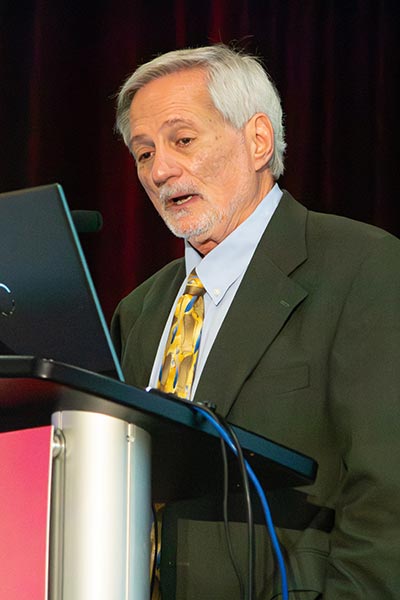
Vanita R. Aroda, MD, Director of Diabetes Clinical Research at Brigham and Women’s Hospital and Associate Professor of Medicine at Harvard Medical School, reported that in early type 2 diabetes, CagriSema demonstrated disease-modifying properties that could impact the course and trajectory of disease. REIMAGINE 1 results show that CagriSema provided superior reductions versus placebo in A1C and body weight, alongside improvements in cardiometabolic parameters and beta cell function.
“In terms of achieving clinically relevant weight reduction targets, we talk about 5–10% being your moderate weight reduction, where you see improvement in parameters, 90% and 77% achieve those with a high single dose of CagriSema, compared to 27% with placebo,” Dr. Aroda explained.
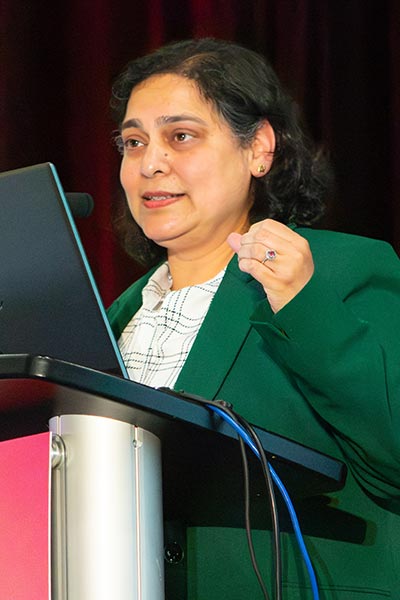
REIMAGINE 1 assessed 40 weeks of treatment with CagriSema in people with type 2 diabetes that was inadequately controlled with diet and exercise, followed by a 12-week evaluation after treatment discontinuation with 189 participants. The randomized, double-blind, placebo-controlled study was conducted at 42 sites in the United States, China, Hungary, Italy, Poland, and Serbia. It enrolled treatment-naive participants, with a median disease duration of 1.4 years, consistent with a population with early type 2 diabetes.
The safety profile of CagriSema was consistent with that of GLP-1 RAs and multi-agonists, with no new safety or tolerability issues identified.
REIMAGINE 2
REIMAGINE 2 was the first study in type 2 diabetes to compare the efficacy and safety of CagriSema versus its individual components or placebo.

Akshay Jain, MD, FRCPC, FACE, CCD, ECNU, DABIM, DABOM, Clinical Instructor in Medicine at the University of British Columbia, Canada, reported that CagriSema provided added benefits versus its individual components in adults with inadequately controlled type 2 diabetes on metformin, with or without a sodium-glucose cotransporter 2.
REIMAGINE 2 trial is a large, global, phase 3, 68-week trial, involving 2,700 people from 30 countries, including a subgroup of participants using continuous glucose monitoring (CGM).
Dr. Jain reported CagriSema provided superior reductions in A1C and body weight compared with semaglutide or cagrilintide alone. In participants using CGM, CagriSema also led to improvements to time in target range and time in tight range. Further, the safety profile of CagriSema was similar to that reported in previous trials of CagriSema and cagrilintide, and the known safety profile of semaglutide.
Among a wide range of positive outcomes, Dr. Jain reported that maximum weight reduction (14%) was seen in the CagriSema 2.4 mg group. He added that nearly one out of four individuals with type 2 diabetes, when starting with CagriSema, going up to 2.4 mg, would be able to achieve a weight reduction of at least 20%.

Looking at composite outcomes related to lower A1C outcomes, 57% of individuals on CagriSema 2.4 mg were able to achieve a composite endpoint of an A1C of 6.5 or lower and a weight reduction of 10% or more.
“To me, as a clinician, what it means is that CagriSema shows greater A1C and weight reduction compared to semaglutide at the same dose level, allowing us to expand our toolkit in the management of people living with diabetes,” Dr. Jain said.
REIMAGINE 3
“CagriSema is an effective option to advance basal insulin therapy in people with inadequately-controlled type 2 diabetes,” noted Julio Rosenstock, MD, Clinical Professor of Medicine at Texas Southwestern Medical Center, in reviewing REIMAGINE 3 trial results.
CagriSema provided significant and clinically relevant reductions in A1C and other glycemic parameters. It also provided robust reductions in body weight, with steady-state weight not achieved by week 40. The safety profile was consistent with previous studies of CagriSema and the GLP-1 RA class.
“CagriSema, when available, may become a solid option to advance basal insulin therapy in inadequately controlled type 2 diabetes to achieve potentially greater A1C reductions and weight loss than previously shown with a GLP-1 RA,” Dr. Rosenstock said.
Speaking to the totality of outcomes presented across the type 2 diabetes spectrum, Dr. Rosenstock closed by saying the combination treatment has “potential of being disease-modifying,” adding, “This is a very good potential track for the future.”

Save the date
Make plans to join us June 18–21, 2027, for the 2027 Scientific Sessions at the Walter E. Washington Convention Center in Washington, DC. Registration will open in January.