
Orforglipron was recently approved by the U.S. Food and Drug Administration (FDA) as the first small-molecule glucagon-like peptide-1 receptor agonist (GLP-1 RA). The FDA approval came for weight loss as part of a clinical development program specific for obesity and not for type 2 diabetes.

“The head-to-head ACHIEVE-3 trial tested two oral GLP-1 RA agents: oral semaglutide, currently approved for type 2 diabetes, versus the small-molecule, oral orforglipron, currently approved for obesity but not yet for type 2 diabetes. The trial demonstrated clinically meaningful differences important for the management selection-making process,” said Julio Rosenstock, MD, Clinical Professor of Medicine at the University of Texas Southwestern Medical Center. “I want to emphasize that this was a type 2 diabetes trial conducted with diabetes dosages for orforglipron and diabetes doses of oral semaglutide. The recent approval of orforglipron and oral semaglutide for the management of obesity was based on higher dosages than those used for type 2 diabetes.”
Dr. Rosenstock will discuss head-to-head data for the two approved oral GLP-1 agents in the symposium From Pen to Pill: Achieving a Paradigm Shift in Type 2 Diabetes—The Orforglipron ‘ACHIEVE’ Clinical Program on Monday, June 8 from 1:30–3:00 p.m. in Great Hall A of the Ernest N. Morial Convention Center. On-demand access to recorded presentations will be available to registered participants following the conclusion of the 2026 Scientific Sessions, from June 10–August 10.
The ACHIEVE program compared the oral orforglipron non-peptide GLP-1 RA to dapagliflozin, oral semaglutide, and placebo at multiple doses in global populations living with type 2 diabetes.

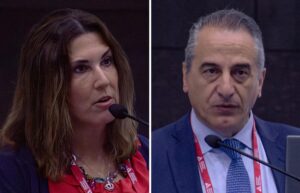
“There is a particular value in this molecule because it can be taken regardless of meals since it’s not a peptide,” said Francesco Giorgino, MD, PhD, Professor of Endocrinology at the University of Bari Aldo Moro, Italy. “It does not require any fasting, it can be taken with meals, after meals, before meals, and this is very convenient for patients. Moreover, it is an effective drug in terms of glucose [management] and weight-lowering effects.”
Dr. Giorgino will discuss the results of ACHIEVE-5, which compared orforglipron versus placebo as an add-on to insulin glargine in people living with type 2 diabetes for several years. Three different doses of orforglipron showed significant reductions in both A1C and body weight in this population.
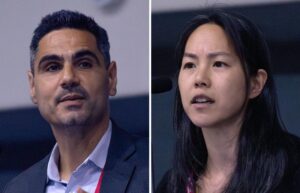
Michelle D. Welch, MD, Founder of Diabetes and Metabolism Specialists, San Antonio, will discuss the results of ACHIEVE-2, which showed three different doses of orforglipron produced better A1C reduction and weight loss versus dapagliflozin. The ACHIEVE trials also showed improvements in multiple cardiovascular risk factors.
Alice Yuk Yan Cheng, MD, FRCPC, Associate Professor of Medicine, University of Toronto, Canada, will look at where non-peptide oral GLP-1 RAs might fit into diabetes treatment algorithms. Orforglipron is the first of what is expected to be multiple non-peptide oral GLP-1 RAs.

Save the date
Make plans to join us June 18–21, 2027, for the 2027 Scientific Sessions at the Walter E. Washington Convention Center in Washington, DC. Registration will open in January.