

Good nutrition is vital for individuals with diabetes, who are often trying to lose weight to help manage their blood glucose levels. But weight loss can be complicated by available food choices, natural physical changes, such as menopause, and seeking nutritional information from inaccurate sources.

During the Scientific Sessions’ Consensus or Controversy? Hot Topics in Nutrition 2026, a panel of experts will discuss nutrition and how it affects individuals with diabetes or prediabetes across the lifespan and ethnic populations, and the importance of providing people being treated for these conditions with accurate information. The symposium will be held on Saturday, June 6 from 4:30–6:00 p.m. in Hall E-3 of the Ernest N. Morial Convention Center. On-demand access to recorded presentations will be available to registered participants following the conclusion of the 2026 Scientific Sessions, from June 10–August 10.
Women face weight gain challenges when going through the perimenopause-menopause transition, said Hillary Wright, MEd, RDN, LDN, Director of Nutrition Counseling for the Wellness Center at Boston IVF. She will address the dynamics of nutrition, hormones, and long-term health as they relate to menopause.
“Weight gain is a major risk factor for the development or the worsening of insulin resistance,” she explained. “We know weight gain is a major risk factor for diabetes, which is a stronger risk factor for cardiovascular disease in women than it is for men.”
While it’s difficult to determine how much of a woman’s menopausal weight gain is related to which influence, reduced physical activity is likely the biggest risk factor, Ms. Wright said. She noted that, according to the Study of Women’s Health Across the Nation (SWAN), women start slowly gaining weight in their mid-forties, when many move from a more physically active lifestyle to a more sedentary one. This is much earlier than the average age of menopause at roughly 51, when women may start paying more attention to their weight changes, she added.
“When it comes to diabetes prevention, physical activity, including strength training, at least twice a week, is non-negotiable for reducing many of the health risks that are associated with the menopause transition and beyond, because physical activity is such a critical stimulator of chemistry that helps to naturally clear glucose out of your blood,” Ms. Wright said. “Even modest amounts of weight loss can reduce people’s risk of transitioning from prediabetes into diabetes.”
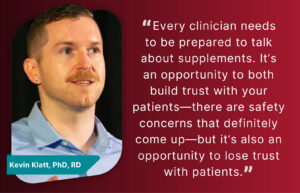
Also during this session, Jessica Wilson, MS, RDN, of The Body Politic Inc., will discuss the controversy around ultra-processed foods. Kevin Klatt, RD, PhD, Assistant Professor at the University of Toronto, Canada, will discuss how social media can deliver misinformation on supplements that runs counter to science. Sherene Chou, MS, RDN, Director of Community Engagement at Food + Planet, will offer strategies for optimizing the delivery of nutrition care to immigrant and refugee populations.

Save the date
Make plans to join us June 18–21, 2027, for the 2027 Scientific Sessions at the Walter E. Washington Convention Center in Washington, DC. Registration will open in January.