

Body mass index (BMI) has long been a cornerstone of obesity diagnosis, but experts remain split on whether that should still be the case in 2026, now that more precise measurements and definitions are emerging.
Two authors of recent publications, which have added context to an ongoing debate, shared their viewpoints during the Friday, June 5 session, BMI on Trial: Should it Still Define Obesity. On-demand access to recorded presentations will be available to registered participants of the 2026 Scientific Sessions through August 10.
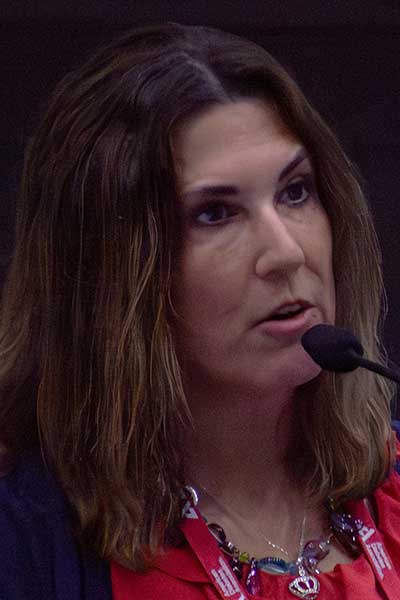
Leigh Perreault, MD, Professor of Medicine at the University of Colorado Anschutz Medical Campus, spoke in defense of BMI. Dr. Perreault was a section lead on the American Diabetes Association’s® (ADA’s) Professional Practice Committee for Obesity, which just one day earlier had published “Screening, Diagnosis, Evaluation, and Staging of Obesity in Adults: Standards of Care in Overweight and Obesity—2026.” The new standards retained BMI as a core measure and, in certain populations, expanded it to be used with race- and ethnicity-specific thresholds and waist circumference-based measures, in order to reduce risk of underdiagnosis.
All roads lead back to BMI, Dr. Perreault said.
“Everything we know about obesity prevalence and health risks, it’s based on BMI,” she explained. “Our very definition of excess adiposity and large waist circumference—the thresholds we know and hold so dear—they’re based on BMI. And we really can’t criticize the BMI for information it was never meant to provide. It was never a test for body composition or assessment of how the patient’s doing.”
BMI is an easy and inexpensive part of a larger puzzle, she said, and it doesn’t replace clinicians, who ultimately evaluate if and how people in their care are affected or could be affected by their BMI.

Francesco Rubino, MD, Professor and Chair of Bariatric and Metabolic Surgery at King’s College in London, United Kingdom, spoke in favor of moving beyond BMI in diagnosing obesity. Dr. Rubino was Chair of the Lancet Diabetes & Endocrinology Commission on Clinical Obesity, which released its “Definition and diagnostic criteria of clinical obesity” in January 2025. For clinical assessment, “all roads lead away from BMI,” he argued.
Conditions are typically defined from the bottom up, bedside to population level, Dr. Rubino said, but the insurance industry, not the medical profession, defined obesity top-down from the population level. As a result, he said, BMI and other measures capture an excessively heterogeneous population whose health statuses and outlooks can vary widely. Dr. Rubino said that obesity shouldn’t always be considered a disease, and to this end, the Lancet commission supported specific diagnoses of clinical obesity (obesity-related organ dysfunction or limitations on daily activities) and preclinical obesity (no functional impairment).
That diagnosis framework is like a prism that refracts white light into component colors, Dr. Rubino said.
“It makes two more homogeneous groups—one with disease (clinical obesity) and one with a risk state—so that we can match care to need,” he explained. “We will have proportional disease-level treatment for clinical obesity and proportional risk-reduction treatment, including with medications where warranted, for preclinical obesity.”
During her rebuttal, Dr. Perreault questioned the Lancet commission’s framing of obesity diagnoses.
“It’s a departure from the way that we think about many other diseases,” she said. “People don’t need to have diabetes, be sick, and have end-stage disease to have diabetes. They can just have diabetes.”
She also focused on the real-world impact of cutting BMI out of the clinical diagnosis of obesity. She cited a large study of primary care charts in Canada that showed just fewer than half of people with a BMI of at least 30 also had a diagnosis of obesity, only 11.5% had a recorded waist measurement, and no data for body composition measurements, which she noted are more expensive and not likely to be covered by insurance. Single exams or blood tests already diagnose many diseases, she added.
“In my very humble opinion, requiring additional measures beyond BMI, as well as the manifestations of obesity-related diseases, to diagnose clinical obesity represents an uncommon standard and even a bias against the very people we’re trying to identify,” Dr. Perreault said in conclusion. “Let’s not do this. This is a big step backward.”
In his rebuttal, Dr. Rubino addressed concerns that the preclinical obesity definition may result in worse insurance coverage. Because insurers like predictability, he said, specifically defining the risk state and disease state removes uncertainty about the cost of disease versus the cost of treatment and ultimately makes coverage more possible. In addition, he said, defining the preclinical obesity condition opens the door to proportionately lower risk and lower cost treatments, creating clinical and commercial incentives for a longer pipeline of therapies that can help a wider number of people.
“An accurate disease diagnosis is important because we have a major advance in therapeutics, and we would squander that advance if we don’t reform an obsolete and inadequate diagnostic infrastructure,” Dr. Rubino concluded.

Save the date
Make plans to join us June 18–21, 2027, for the 2027 Scientific Sessions at the Walter E. Washington Convention Center in Washington, DC. Registration will open in January.