
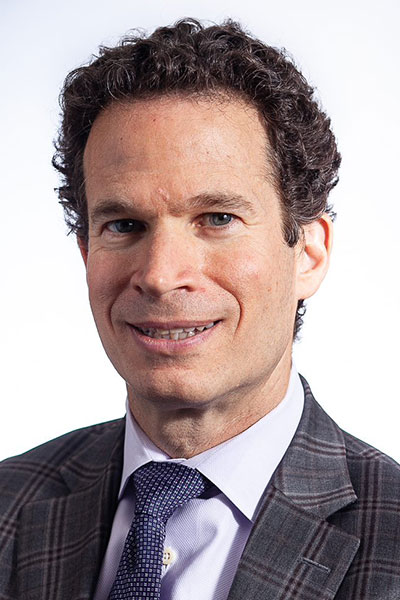
David Liebovitz, MD
Professor
Northwestern University
Featured in the Session: AI and Innovation for Clinical Health Care Delivery in DM
When
Sunday, June 7
at 1:30 p.m.
Where
Hall E-3 (Level 1)
Ernest N. Morial Convention Center
What is your presentation about?
This 15-minute talk maps the current landscape of large language models (LLMs) in diabetes care: what is working today (ambient scribes, prior authorization, continuous glucose monitoring (CGM) narrative summaries), what is not yet ready, and the rigorous diabetes-specific evaluations our field has yet to build. I pair an optimistic recent finding on LLM clinical reasoning (Brodeur et al., Science 2026) with a consequential cautionary trial (Flory et al., Diabetes Care 2025) in which GPT-4 diverged systematically from 31 endocrinologists on first-line type 2 diabetes therapy. Two projects from my own lab, a 2022 rule-based diabetes treatment application and a 2026 multimodal MedGemma pipeline that fuses CGM, retinal imaging, and clinical data on the NIH Bridge2AI / AI-READI flagship dataset each bookend how far the technology has moved. Attendees leave with a practical centaur-versus-cyborg framework, a critical eye for verifying AI output, and a concrete call to build the prospective diabetes-LLM benchmarks the field still lacks.
How do you hope your presentation will impact diabetes research or care?
I hope attendees leave with two convictions: that LLMs are capable enough today to materially affect how diabetes care is delivered, and that our community owns the responsibility to build the prospective, diabetes-specific evaluations that do not yet exist. If a handful of researchers in the room go home and design the insulin-titration benchmark, the gestational diabetes guideline-adherence study, or the CGM-LLM randomized trial we currently lack, this talk will have done its job.
How did you become involved with this area of diabetes research or care?
I have interests both in diabetes care and in artificial intelligence. As a general internist and clinical informaticist at Northwestern, I have spent years caring for patients with diabetes while building decision-support tools for the same population, starting with a rule-based diabetes treatment application in 2022 and most recently a multimodal MedGemma pipeline trained on the NIH Bridge2AI / AI-READI dataset. Watching the technology evolve from brittle deterministic rules to foundation models that can read a fundus image, summarize an ambulatory glucose profile, and generate a literacy-adapted explanation has made the responsible deployment question urgent for me, and the diabetes community is where I most want to see it answered well.