


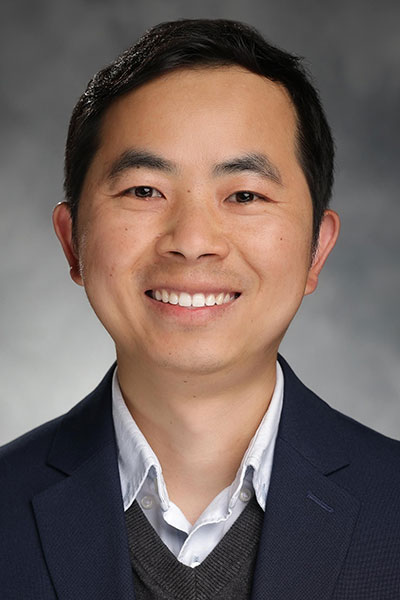
Kuo Du, PhD
Assistant Professor
University of Kansas Medical Center
Featured in the Session: Is Obesity Accelerated Aging? A Physiologic Perspective
When
Saturday, June 6
at 8:00 a.m.
Where
245 (Level 2)
Ernest N. Morial Convention Center
What is your presentation about?
My presentation explores how hepatocyte senescence drives metabolic liver disease and systemic dysfunction. I will show how senescent hepatocytes actively reshape both the liver and distant organs through senescence-associated secretory phenotype (SASP) signaling. By integrating molecular, animal, and human data, I highlight senescence as a key mechanism underlying metabolic dysfunction-associated steatotic liver disease (MASLD) progression. Finally, I discuss emerging strategies to target senescence as a novel therapeutic approach.
How do you hope your presentation will impact diabetes research or care?
I hope my presentation will highlight that over 65% of patients with type 2 diabetes have MASLD, a rapidly rising and clinically significant comorbidity. By linking hepatocyte senescence to systemic metabolic dysfunction, including pancreatic islet impairment, this work underscores the liver as a critical therapeutic target in diabetes. Ultimately, targeting liver senescence may offer new strategies to improve glycemic management and reduce diabetes-related complications.
How did you become involved with this area of diabetes research or care?
My research began with a focus on liver biology, but over time I became increasingly aware of how closely liver dysfunction is linked to type 2 diabetes in patients. Seeing that a large proportion of individuals with diabetes also have MASLD motivated me to better understand this connection. This led me to focus on hepatocyte senescence as a potential mechanism linking liver disease to systemic metabolic dysfunction.